
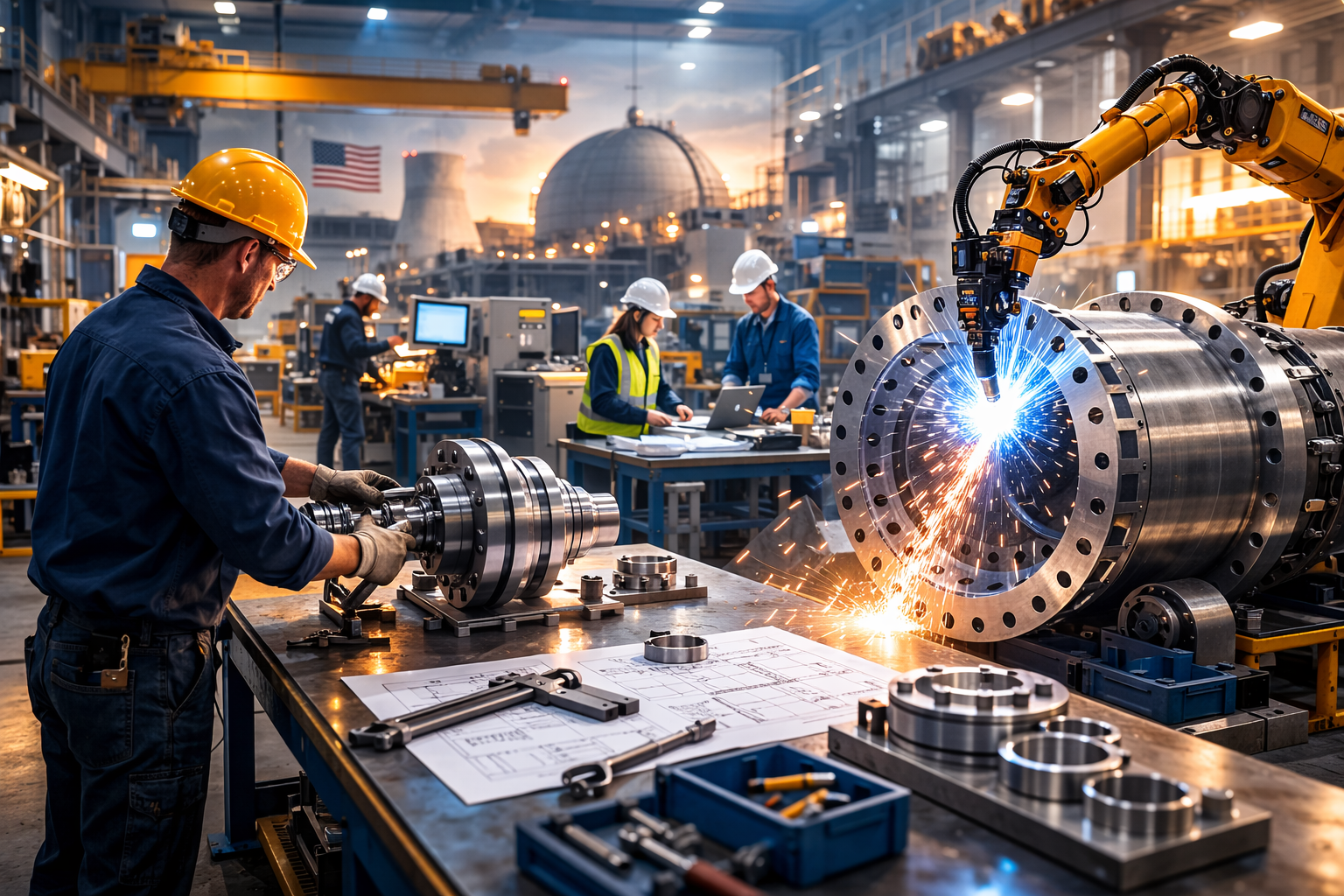
As nuclear energy continues to gain momentum across the United States, Tennessee is emerging as a key hub for growth, investment, and innovation.
With billions in private investment, a growing workforce pipeline, and an established nuclear ecosystem anchored by Oak Ridge, the industry is creating new opportunities for manufacturers across the state.
For many manufacturers, nuclear can feel complex or out of reach. However, the reality is that there are practical, accessible ways to get involved.
Here are five things manufacturers should know about the nuclear industry in Tennessee.
1. The Industry Is Growing and Creating Real Demand
Nuclear is not a future concept in Tennessee. It is already expanding.
The state has secured more than $8 billion in private investment and over 2,500 new jobs tied to nuclear-related projects. Continued support through state initiatives is further accelerating growth.
For manufacturers, this means increasing demand for components, materials, and services that support nuclear operations and development.
2. You Do Not Need to Build Reactors to Participate
One of the most common misconceptions is that involvement in nuclear requires building or operating a reactor.
In reality, most opportunities exist within the supply chain.
Manufacturers can contribute through:
Fabrication and machining
Components and assemblies
Control systems and instrumentation
Shielding and specialty materials
This allows companies to enter the nuclear space by leveraging existing capabilities.
3. The Nuclear Supply Chain Is Broader Than You Think
Beyond manufacturing, the nuclear industry depends on a wide range of supporting services.
Opportunities also exist in:
Engineering and design
Construction and installation
Operations and maintenance
Waste management and decommissioning
This creates entry points for both product-based and service-based manufacturers.
4. Workforce Development Is a Major Advantage in Tennessee
Tennessee offers a strong and growing talent pipeline for nuclear-related work.
The state is investing in workforce development through:
University programs, including nuclear engineering
Community college partnerships
Industry-led training initiatives
In many cases, workforce pipelines can be developed within a relatively short timeframe, making it easier for manufacturers to scale operations.
5. Entry Starts with Preparation, Not Transformation
Getting involved in nuclear does not require a complete overhaul of your business.
Instead, manufacturers can take practical first steps:
Assess current capabilities and processes
Identify gaps in quality standards or certifications
Explore how existing products or services align with nuclear needs
Build relationships within the nuclear ecosystem
Entry into the industry typically happens in stages, with opportunities expanding over time.
Looking Ahead
Nuclear energy is becoming an increasingly important part of Tennessee’s economic future, and manufacturers will play a critical role in supporting that growth.
With strong investment, a skilled workforce, and an established industry presence, Tennessee manufacturers are well positioned to participate in the nuclear supply chain.
Understanding where your business fits and how to prepare is the first step toward capturing these opportunities.